

Cryptocurrency in Ukraine 2026
Digital assets have ceased to be a niche hobby for enthusiasts. Cryptocurrency in Ukraine in 2026 is an everyday reality for hundreds of thousands of people who buy, sell, hold and invest in Bitcoin, Ether and stablecoins. At the same time, many myths still circulate around this topic: some are convinced that crypto was banned, others that income from transactions doesn’t need to be declared. This article clarifies the key points: legal status, taxation, choosing a platform, security and real risks.
This is general information and not financial advice.
The material is built on principles of neutrality and evidence. Where possible, directions to search for official sources are indicated — from the Verkhovna Rada to the State Tax Service. However, legislation evolves quickly, so before making decisions it is worth checking data against current regulatory documents or consulting a specialized lawyer.
TL;DR
- Cryptocurrency is not banned in Ukraine — transactions with it are legal, but regulated.
- The cryptocurrency law defines virtual assets and sets requirements for service providers (VASP).
- Income from transactions with virtual assets is taxable; the reporting obligation lies with the taxpayer.
- Exchanges and exchangers must comply with AML/KYC requirements.
- Security depends on platform choice and storage discipline.
- Risks — regulatory, technical, counterparty and tax — can be managed with an informed approach.
Find a Safe Crypto ExchangeChoose a trusted crypto exchanger in your city
Is cryptocurrency banned in Ukraine: myths vs reality
There is no regulatory act that would prohibit owning or exchanging digital assets.
The myth of a ban arises for several reasons. First, some banks sometimes block transactions related to crypto services — this is an internal policy of the financial institution, not a state ban. Second, the National Bank has repeatedly reminded that Bitcoin is not a legal means of payment, which some interpreted as a ban. In fact, this only means that a seller is not obliged to accept crypto instead of hryvnia.
So the correct answer to the question “is cryptocurrency banned in Ukraine” is no. But the user is responsible for complying with tax and regulatory rules.
Cryptocurrency law and regulatory framework
The basic law defines virtual assets as an intangible asset that exists in the form of electronic data.
Main provisions
The law establishes three categories of virtual assets — backed, unbacked and financial. Each has its own regulatory specifics. Providers of virtual asset services (VASP — Virtual Asset Service Provider) are required to register with the designated state authority and implement KYC (Know Your Customer — customer identification) and AML (Anti-Money Laundering) procedures.
Regulatory trends
In 2025–2026 there has been a tightening of reporting requirements for VASPs to regulators. In particular, there is discussion of an obligation to report suspicious transactions and to retain transaction data for a defined period. These steps align with pan-European practice, notably the MiCA framework in the EU.
To track current changes, monitor official publications from the Verkhovna Rada, the NCUERF (NKTsPFR) and the Ministry of Digital Transformation.
Is cryptocurrency taxed in Ukraine and how to report
Income from transactions with digital assets is included in the tax base. This is an unambiguous trend that is gaining detail with each subsequent clarification from the State Tax Service (DPS).
General approach
Profit obtained from the sale of virtual assets is treated as an individual’s income. The rate and method of calculation are determined by the Tax Code, taking into account special rules for digital assets. The obligation to declare lies with the taxpayer, not with the exchange or exchange service.
What to do in practice
Keep records of every transaction: date, amount in hryvnia equivalent, type of operation (buy, sell, exchange). Keep supporting documents — screenshots, statements, receipts. If operations are complex — mining, staking, receiving airdrops — consult a tax advisor who specializes in virtual assets.
If you use foreign platforms, pay attention to currency control rules and possible obligations to disclose foreign accounts.
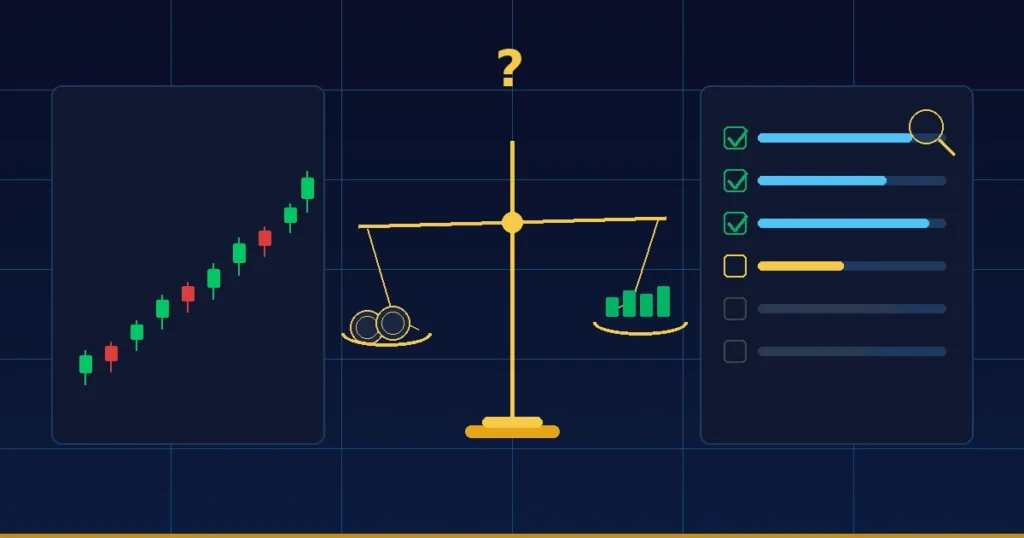
How to choose an exchange or exchanger: checklist
Platform choice is the first decision that affects the security of funds and convenience of operations.
Evaluation criteria
- Regulatory status. Is the service registered as a VASP? Does it claim compliance with local or international requirements?
- Fiat rails. Does it support hryvnia? What deposit and withdrawal methods are available — bank cards, SEPA, SWIFT, P2P?
- Liquidity. A high trading volume means narrower spreads and faster order execution.
- Fees. Compare not only trading fees but also deposit/withdrawal charges.
- Security. Presence of cold storage, multisig, insurance fund, and a public incident history.
- Customer support. Availability of Ukrainian-language support, responsiveness.
- Limits and restrictions. Maximum withdrawal amounts, verification requirements for different access levels.
When choosing between a centralized exchange (CEX) and a P2P exchanger, consider: a CEX usually offers better liquidity and built‑in escrow, while P2P provides flexibility in payment methods. Assess risks accordingly.
How it works in practice
- Choose a platform. Compare three to four services by the criteria above; pay attention to reviews and legal presence.
- Complete registration and KYC. Prepare an identity document. Verification can take from a few minutes to several days.
- Enable two-factor authentication (2FA). Use an authenticator app, not SMS.
- Make a test deposit. Deposit a small amount of hryvnia or crypto asset and check that funds are credited correctly.
- Execute the operation. Buy or sell an asset. Record the date, amount and rate for tax accounting.
- Withdraw funds. Transfer fiat to a bank account or crypto to a personal wallet. Before withdrawing large amounts, make a small test transaction.
- Record the operation. Save supporting data in a file or a specialized tracker.
- Review tax obligations. At the end of the reporting period, determine whether taxable income has arisen.
Advantages and limitations
Digital assets open access to a global market without being tied to banking hours or geography.
Advantages
- Speed of cross-border transfers compared to traditional SWIFT.
- The ability to diversify a portfolio with a new asset class.
- Transaction transparency on public blockchains.
- Accessibility: you don’t need large sums to get started.
Limitations
- High volatility of most crypto assets.
- Regulatory uncertainty: rules are being clarified, which creates administrative burden.
- Limited support from Ukrainian banks: some institutions impose additional checks or refuse to process crypto-related transactions.
- Irreversibility of transactions: sending funds to a wrong address is generally not reversible.
A counterargument worth considering: the common claim about the “anonymity” of cryptocurrencies is greatly exaggerated. Most public blockchains allow tracing fund flows, and KYC requirements on exchanges make identification even more transparent.
Risks and ways to minimize them
An informed approach to risks is as important a skill as trading ability.
- Regulatory risk. Changes in legislation can restrict access to certain services. How to reduce: follow updates to regulations, work with licensed platforms.
- Security risk. Hacker attacks, phishing, loss of private keys. How to reduce: cold storage for significant savings, hardware 2FA, unique passwords.
- Counterparty risk. Dishonest P2P partners or exchangers. How to reduce: escrow function, check counterparty ratings, avoid prepayment outside the platform.
- Liquidity risk. Low trading volume in a hryvnia/altcoin pair leads to wide spreads. How to reduce: work with liquid pairs or execute trades in stages.
- Tax risk. Incorrect reporting or ignoring obligations. How to reduce: systematic accounting, consultation with a specialist.
- Bank interaction risk. Account or transaction blocking. How to reduce: find out the bank’s policy on crypto operations in advance.
Common mistakes
- “Cryptocurrency was banned.” No ban exists. Transactions are legal but regulated.
- “Crypto income doesn’t need to be declared.” It does. Profit from the sale of virtual assets is subject to taxation.
- “An exchange keeps my funds safer than my wallet.” An exchange is a custodial service with counterparty risk. For long-term storage it’s safer to use a cold wallet.
- “P2P is always cheaper.” Not necessarily. After accounting for spread and fraud risk, a P2P deal can be more expensive. Trust proven P2P.
- “KYC violates privacy, so it’s better to avoid verified platforms.” Incorrect. Refusing KYC narrows access to liquid markets and increases the risk of ending up on an unregulated platform.
- “Stablecoins have no risks.” Stablecoins depend on the issuer’s reserves and governance decisions. A depeg (loss of peg) is a documented market precedent.
- “SMS is enough for two-factor authentication.” SMS is vulnerable to SIM-swap attacks. A hardware key or authenticator app is significantly more secure.
Key terms
Virtual asset
A digital asset that exists as electronic data in a distributed ledger and can be used as a medium of exchange or a store of value.
Blockchain
A distributed database where transactions are recorded in sequential blocks and protected cryptographically.
Centralized exchange (CEX)
An intermediary platform that holds users’ funds and ensures order execution.
Decentralized exchange (DEX)
A protocol that allows asset exchange directly between wallets via smart contracts without centralized custody.
VASP
Virtual Asset Service Provider — exchanges, exchangers, custodial services that are subject to registration and compliance requirements.
KYC / AML
Customer identification and anti-money laundering procedures required for regulated platforms.
Stablecoin
A crypto asset whose value is pegged to a fiat currency or another asset to reduce volatility.
Cold wallet
A device or storage method for private keys that is not connected to the internet, significantly reducing the risk of hacks.
Escrow
A mechanism of conditional custody by a third party until the terms of a deal are fulfilled; common in P2P trading.
Additional questions
Can you pay with cryptocurrency in stores in Ukraine?
Formally, the hryvnia remains the only legal means of payment. Some sellers accept crypto by agreement, but this does not create a legal obligation for the rest of the market. For mass payments, the infrastructure is still insufficient.
Do I need to pay tax if I only bought and didn’t sell?
Taxable income usually arises upon realization — sale or exchange of one asset for another. The mere fact of purchase generally does not create a tax obligation. However, exchanging one cryptocurrency for another may be considered a taxable operation.
Which exchanges are available to Ukrainians in 2026?
Ukrainian users have access to both local platforms and major international exchanges. Availability of a particular platform depends on its licensing policy and sanctions restrictions. Check the terms of use before registering.
Is it safe to store crypto on an exchange?
Short-term storage for active trading is acceptable. For significant amounts, a cold wallet is recommended. No exchange is immune to hacks or bankruptcy.
What to do if the bank blocked a transfer to a crypto exchange?
Contact the bank to find out the reasons. Sometimes providing an explanation about the source of funds is enough. If the bank systematically refuses, consider another bank or an alternative funding method.
Do sanctions apply to cryptocurrency operations?
Yes. International and national sanctions lists apply to the crypto market as well. Regulated platforms are required to check addresses and counterparties for compliance with sanctions requirements.
Is a license required for private mining?
Private mining for personal use currently does not require a license. However, income from mining is taxable, and industrial-scale operations may require additional permits, including those related to energy consumption.
How to check if an exchanger is legitimate?
Check for a legal address, contact details, registration as a VASP. Read independent reviews. Avoid services that require no verification and offer rates that significantly differ from the market.